
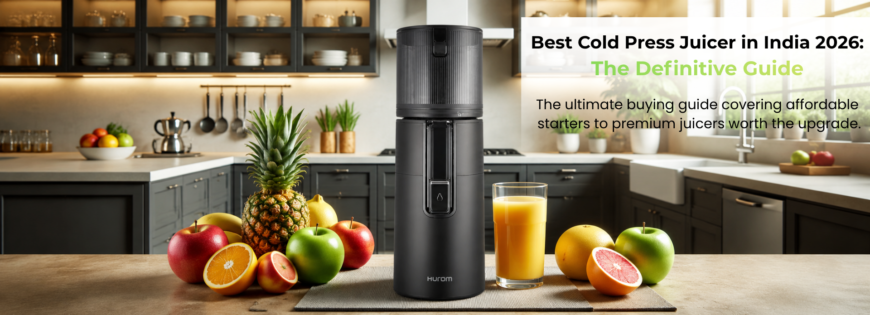
Best Cold Press Juicer in India 2026: The Definitive Guide
Everything you need – from budget picks under ₹20,000 to premium models worth every paisa.
Cold press juicers have quietly become one of India’s most searched kitchen appliances. But with prices ranging from ₹8,000 to ₹55,000 and dozens of brands claiming to be “the best,” the market is genuinely confusing.
This guide cuts through the noise. We’ve researched machines across every price tier, analysed what Indian households actually juice — coconut, amla, sugarcane, bitter gourd, ginger, turmeric – and assembled the most complete cold press juicer resource available for 2026. Whether you’re buying your first juicer or upgrading from a centrifugal model, you will not need another guide.
Below you will find our overall recommendation upfront, then seven fully developed sections — each one a deep dive into a specific question Indian buyers ask most often.
| OUR TOP PICKS AT A GLANCE Best overall (daily use, serious juicer): Hurom H400 (₹44,990) Best value (most households): Hurom E50 (₹17,500–₹19,000) Best gift for parents: Hurom H400 or H320N Best entry-level: Hurom E30 (₹8,500–₹10,000) |
01. Cold Press vs Centrifugal: The Truth for Indian Kitchens
Walk into any Indian electronics store and you’ll find two very different machines both called “juicers.” One spins at 10,000+ RPM and costs ₹2,000. The other turns at 60–80 RPM and costs ₹15,000 or more. The difference is not just price — it is a fundamentally different approach to extracting juice, and that difference matters enormously for the way Indian households actually cook and drink.
How each technology works
Centrifugal juicers use a fast-spinning mesh basket with serrated teeth. Produce is shredded and juice is flung out by centrifugal force. It is fast (30 seconds for a glass), loud, and inexpensive. The problem is heat and oxidation: the high-speed friction raises the juice’s temperature, and all the air incorporated during spinning starts breaking down enzymes and nutrients almost immediately. The juice separates within minutes and must be consumed right away.
Cold press juicers (also called slow juicers or masticating juicers) use a rotating auger — essentially a large screw — to crush and press produce against a fine strainer at very low RPM. No heat, minimal air, and significantly more juice extracted from the same amount of produce. The result is a darker, richer liquid with noticeably better shelf life — up to 72 hours in a sealed glass bottle without significant nutrient loss.
The comparison at a glance
| Feature | Cold Press | Centrifugal | Winner |
| Nutrient retention | High — minimal heat | Lower — heat + oxidation | Cold Press |
| Juice shelf life | 48–72 hours | 20–30 minutes | Cold Press |
| Juice yield | 20–30% more per kg | Lower, wet pulp | Cold Press |
| Noise level | Very quiet | Very loud | Cold Press |
| Speed | Slower (1–3 mins) | Fast (30 secs) | Centrifugal |
| Price | ₹8,000–₹55,000 | ₹1,500–₹6,000 | Centrifugal |
| Leafy greens (spinach, wheatgrass) | Handles very well | Poor yield | Cold Press |
| Amla & small fruits | Excellent extraction | Moderate | Cold Press |
| Ginger & turmeric | Excellent | Very poor yield | Cold Press |
Why this matters for the Indian kitchen specifically
The Indian context changes the equation significantly. We juice a very different range of produce than Western markets: sugarcane, coconut, amla, bitter gourd, bottle gourd, turmeric, ginger, and fresh herbs are all common. Centrifugal juicers struggle badly with fibrous and dense produce — the mesh clogs, turmeric and ginger yield almost nothing, and leafy vegetables produce barely any liquid.
Cold press juicers handle all of these with ease. The slow crushing action manages fibrous produce well, and the fine strainer extracts far more from dense ingredients. For a household that drinks amla shots every morning or makes karela juice for health reasons, the difference in yield alone justifies the price premium within a few months of use.
| HONEST CAVEAT If your household juices only oranges and sweet lime twice a week, a centrifugal juicer is perfectly adequate. Cold press is worth the premium for households that juice daily, use a wide variety of produce, or prioritise nutritional quality. Do not buy a cold press juicer for lifestyle reasons alone — buy it because you will use it seriously. |
→ Read full guide: Cold Press Juicer vs Centrifugal Juicer: The Truth for Indian Kitchens
02. Best Cold Press Juicers Under ₹20,000
The sub-₹20,000 cold press market has matured significantly over the last two years. Where previously your only real option was a poorly built white-label machine, today you have genuine contenders from established brands. Here are the models that earned a spot on this list — and the ones that did not.
| ★ BEST OVERALL UNDER ₹21,000 | |
| Hurom E50 – (Best Value) : ₹20,999.00 RPM: 40 RPM Feed chute: Wide-mouth (82 mm) Motor power: 240W Motor warranty: 10 years Noise: Very low
| 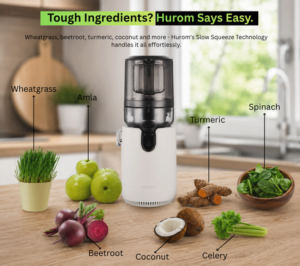 |
| The wide-mouth chute lets you drop whole apples, full carrots, and large amla without pre-cutting. Outstanding yield from ginger and leafy greens. Build quality feels premium at this price. Our top recommendation for most Indian households. | |
| BUDGET ENTRY PICK | |
| Hurom E30 – Entry-Level Cold Press: ₹17,999.00 RPM: 50 RPM Feed chute: Standard Motor power: 150W Motor warranty: 2 years Noise: Low | 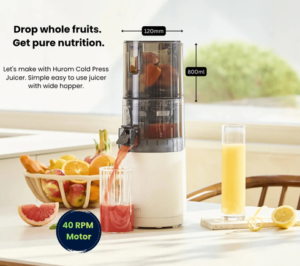 |
| India’s most affordable genuine cold press option. Build quality is noticeably lighter than premium brands and the warranty coverage is limited. A reasonable starting point for first-time buyers not ready to commit ₹15,000+. Expect to upgrade in 2–3 years. | |
What to look out for in this segment
The sub-₹15,000 cold press market has many copycat models sold under forgettable brand names on e-commerce platforms. These typically use similar shell designs with varying internal quality. Three non-negotiables before buying a lesser-known brand:
- Motor warranty duration: Anything under 2 years is a serious red flag in a machine with a premium price tag.
- Availability of spare parts: Especially the auger and strainer mesh, which are wear items.
- Service centre presence: Confirm a service centre exists. Post-purchase support for no-name brands is often non-existent.
→ Read full guide: Best Cold Press Juicer Under ₹20,000 in India: Top Picks for 2026
03. Best Cold Press Under ₹41,000 — Is the Hurom H400 Worth It?
The ₹25,000–₹45,000 range is where cold press juicing gets genuinely luxurious. Machines in this tier are built to last decades, handle virtually any produce effortlessly, and are quiet enough to run at 6am without waking anyone in the household. The Hurom H400 is the machine everyone asks about — but it is not the only serious contender.
| ★ BEST PREMIUM PICK | |
| Hurom H400: ₹40,999 RPM: 43 RPM Feed mechanism: Self-feed hopper Motor power: 150W Motor warranty: 15 years Design: Compact upright | 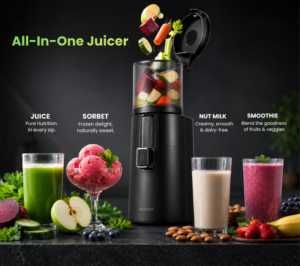 |
| The self-feeding hopper is a genuine game-changer for busy mornings — load the chute, walk away. Produces the clearest, smoothest juice of anything tested. The price is real, but so is the quality and daily-use experience. | |
| MID-RANGE BEST BUY | |
| Hurom H320N: ₹35,999 RPM: 43 RPM Feed chute: Standard Motor power: 150W Motor warranty: 10 years Design: Vertical, elegant | 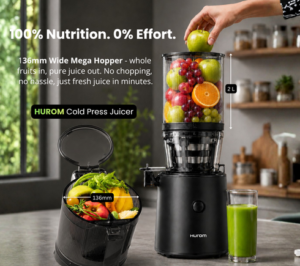 |
| Same Hurom core technology as the H400, without the self-feed hopper. Smaller capacity, slightly more prep required. The sweet spot for 2–3 person households juicing once a day who want Hurom quality without H400 spend. | |
So: is the Hurom H400 worth ₹41,000?
Yes – with conditions. It is worth the price if you juice every single day, value quiet operation absolutely, and want a machine you will never need to replace within your lifetime. The self-feed hopper genuinely changes the daily experience.
04. First Use Guide: What to Do Before Making Your First Juice
Your new cold press juicer has arrived. Before you rush to juice anything, there are important steps that protect the machine, ensure food safety, and guarantee your first glass tastes as it should. Most people skip these — and regret it.
Step 1: Unbox and inspect every part
Lay out all components before assembling. Most cold press juicers include a juicing bowl, auger, fine and coarse strainers, juice cup, pulp container, feeding pusher, and cleaning brush. Cross-check against the parts diagram in your manual. Check for any cracks or damage from shipping — most brands will replace damaged parts if reported within 48 hours of delivery. Attempting to run the machine with a cracked strainer can damage the motor.
Step 2: Wash all components before first use
Non-negotiable. Rinse all plastic parts in warm water with mild dish soap. Do not use hot water (it can warp components) and never put any part in the dishwasher unless explicitly stated as dishwasher-safe. The auger and strainer screens especially need thorough rinsing — manufacturing residue can affect the taste of your first glass and is not something you want to consume.
Step 3: Run a plain water test
Before juicing anything, assemble the machine and run one full cup of plain water through it. This confirms all parts are correctly assembled and flushes out any residual manufacturing odour. Pour the water away. If anything leaks or sounds unusual, stop, disassemble, and consult the manual before proceeding.
Step 4: Start with forgiving produce
Choose apple, carrot, or a simple cucumber-apple blend for your first run. Avoid coconut or very fibrous greens initially. You want to learn how the machine responds to normal produce before pushing it with harder ingredients. This also helps you calibrate the ideal feeding pace without stressing the motor.
Step 5: Clean within 5 minutes of finishing
The single most important habit to build. Juice residue — especially from beets, turmeric, or leafy greens — stains plastic and dries into the mesh strainer, making it very difficult to clean later. Use the dedicated cleaning brush on the strainer mesh after every single use. Cold-press strainer screens are precision-moulded and worth protecting.
Step 6: Use the reverse function
Most premium cold press juicers have a reverse motor function. After cleaning, briefly run a few slices of lemon or lime through the machine and then reverse the motor for 5–10 seconds. The citric acid naturally sanitises the components and helps remove colour staining from beet or turmeric.
| INDIAN KITCHEN TIP A strategy that works well in Indian households: prep your produce for the week on Sunday evening. Wash, peel, and cut everything, store in airtight containers in the fridge. Each morning’s juicing becomes a 5-minute routine instead of a 20-minute project. Cold press juice stored in an airtight glass bottle lasts 48–72 hours without significant nutrient loss. |
05. Buying Guide: 7 Things to Check Before You Buy
The spec sheet for a cold press juicer can be deceptive. RPM numbers, wattage figures, and “yield percentage” claims often say more about marketing than real-world performance. Here are the seven things that actually determine whether a cold press juicer is right for your household.
1. Motor RPM — aim for 43–80 RPM
The auger should turn slowly. 43 RPM (Hurom) and 60–80 RPM (other quality brands) are both effective. Anything above 100 RPM in a machine marketed as “cold press” is a compromise. Lower RPM means less oxidation, better nutrient preservation, and usually a quieter machine. This is the first spec to check.
2. Feed chute diameter — wide-mouth vs standard
Wide-mouth chutes (80 mm+) let you drop whole apples, full carrots, and large chunks without pre-cutting. This saves significant daily prep time. Standard chutes (40–50 mm) require more chopping but work perfectly well if you are willing to prep. If you are juicing at 7am before work, wide-mouth is worth the premium.
3. Motor warranty — 10 years is the gold standard
The motor is the heart of a cold press juicer. Any reputable brand in this category backs their motor with a 10-year warranty. Brands offering only 1–2 years are either not confident in their product or planning for early replacement. This is the single most important warranty figure to check before purchasing.
4. Strainer options — fine and coarse
Premium models come with both a fine strainer (smooth, pulp-free juice) and a coarse strainer (smoothie-style drinks with more fibre). Single-strainer machines are a compromise. Also confirm that replacement strainers are available in India — this is a wear item that will eventually need replacing.
5. Indian produce compatibility
Most machines marketed in India claim to handle local produce well. Very few do it consistently. The genuine test: does it handle amla without clogging? Does it extract meaningful juice from fresh ginger?
6. Noise level — critical for Indian households
Cold press juicers are inherently quiet, but there is meaningful variation between models. Hurom machines are notably whisper-quiet. Some budget models are louder than expected. In a home with elderly family members who wake early or children who sleep late, this matters more than many people anticipate. Test or look for decibel ratings in reviews.
7. After-sales service network in India
Hurom has authorised service centre and responsive customer care. Before purchasing any cold press juicer confirm support exists.
| QUICK DECISION FRAMEWORK Daily user, serious about nutrition, budget ₹40K+: Hurom H400 Daily user, family of 4+, budget ₹30–35K: Hurom H320N Regular user, budget ₹20–25K: Hurom E50 First-time buyer, budget under ₹20K: Hurom E30 |
06. Cold Press Juicer Price in India 2026: Why They Cost More
The price gap between a centrifugal juicer (₹2,000–₹6,000) and a cold press juicer (₹8,000–₹55,000) is real and significant. Here is an honest breakdown of why that gap exists, and how to think about whether it is justified for your specific situation.
The price tiers explained
| Price Tier | Segment | Representative Models | Best For |
| Under ₹20,000 | Entry cold press | Hurom E30 | Curious first-timers |
| ₹20,000–₹25,000 | Mid-range sweet spot | Hurom E50 | Best value ratio |
| ₹25,000–₹35,000 | Upper mid-range | Hurom H320N | Serious daily juicers |
| ₹35,000–₹50,000 | Premium flagship | Hurom H400 | Never-upgrade buy |
Why cold press juicers cost what they do
Precision engineering: A cold press auger is a carefully calibrated piece of hardware. The tolerance between the auger and the strainer screen is measured in fractions of a millimetre. Too wide and yield drops; too narrow and the motor strains. This precision does not come cheap to manufacture at quality.
Motor technology: Low-speed, high-torque motors capable of crushing fibrous produce without overheating are expensive to engineer and build. This is precisely why 10-year motor warranties exist in this category — brands are genuinely confident in the components. Centrifugal motors spin at 10,000+ RPM and tend to wear significantly faster.
Food-grade materials: Reputable cold press brands use Tritan copolyester or equivalent medical-grade plastics for their juicing chambers — materials that do not leach into your juice even after years of daily use. These cost substantially more than standard plastics.
Research and development: Brands like Hurom invest in slow juicing research, strainer mesh improvements, and efficiency optimisation. That R&D cost is distributed across the product price.
The real cost per glass
A more useful frame than upfront cost is cost-per-glass over the machine’s lifetime. A Hurom H400 at ₹45,000 used daily for five years (1,825 days) amounts to ₹24.65 per day in amortisation. Adding typical produce cost of ₹15–25 for a 300 ml glass brings the real cost to roughly ₹40–50 per glass — against ₹150–400 for the same glass at a cold-pressed juice bar. The machine pays for itself within a year for a daily user.
| WATCH OUT Several brands now label centrifugal machines with phrases like “cold press technology” or “cold extraction system.” Always check the actual RPM specification. Any machine running above 200 RPM cannot credibly be called a true cold press juicer. The phrase has no regulatory definition in India, so it is widely misused. |
<1—->
| → Read full guide: Cold Press Juicer Price in India 2026: Why They Cost More and Whether It’s Worth It |
07. Best Juicer Gift for Parents in India: Why a Hurom Wins
Every year, thousands of people across India face the same dilemma: parents or grandparents who would genuinely benefit from better nutrition, who we want to do something meaningful for on birthdays, anniversaries, or health milestones — but who do not need another watch, another piece of clothing, or another decorative item.
A Hurom cold press juicer has become one of the most well-received health gifts in Indian families. Here is why it resonates so consistently, and how to choose the right model.
Why it works for Indian parents specifically
Indian health culture has always valued fresh juice. Amla juice for immunity, karela juice for diabetes management, wheatgrass for alkalinity, ginger-turmeric shots for inflammation — these are not trends imported from elsewhere. They are practices deeply embedded in our households, often inherited from grandparents who squeezed produce by hand.
For parents managing conditions like diabetes, hypertension, or arthritis — which affect millions of Indian adults over 55 — the ability to make fresh, low-glycaemic vegetable juices at home without significant effort is genuinely valuable. The Hurom’s quiet motor means it does not disrupt the household, and the simple assembly means it does not require technical comfort to operate.
Which model to gift
| ★ BEST GIFT: THE SELF-FEEDER | |
| Hurom H400 ₹41,999 MRP Why it works: Self-feed hopper — no standing required Noise: Near-silent Cleanup: Simple, no sharp parts Warranty: 10 years motor | The self-feed hopper is the feature that makes this perfect for elderly parents. Load it, press start, and return to find juice ready. The silent motor and simple cleanup make daily use feel effortless rather than effortful. |
| THOUGHTFUL MID-RANGE GIFT | |
| Hurom H320N ₹35,999 Why it works: Hurom quality, lower investment Ease of use: Very good Noise: Near-silent Warranty: 10 years motor | When the H400 budget is out of reach, the H320N delivers the same Hurom reliability and quiet operation. Requires slightly more active involvement but remains very easy to use. An excellent gift with a premium unboxing experience. |
How to make it a meaningful gift, not just an appliance
A juicer alone is a good gift. A juicer with context is a great one. Three additions that transform it:
- A handwritten recipe card with 3–5 juice recipes specific to your parent’s health needs — karela-amla for diabetes, turmeric-ginger for immunity, beetroot-carrot for haemoglobin. This transforms it from an appliance into a personalised health prescription.
- The first month’s produce: A small basket of amla, ginger, turmeric, and seasonal fruits alongside the machine. The gesture shows you have thought about the whole picture, not just the box.
- A brief setup guide in their preferred language: Hurom manuals are clear, but a personal walkthrough note from you — in Hindi, Tamil, Telugu, or Kannada — removes any hesitation about using it independently.
| THE GIFT THAT KEEPS GIVING A Hurom juicer with a 10-year motor warranty is one of the only gifts that will still be used daily a decade from now — quietly producing fresh, nutrient-dense juice every morning, long after most other gifts have been forgotten, replaced, or set aside. |
Your Best Cold Press Juicer Is the One You’ll Actually Use Every Day
The right cold press juicer isn’t the most expensive one on the market — it’s the one that fits your household’s real juicing habits, budget, and kitchen routine.
If you juice daily and want a machine you’ll never think about replacing, the Hurom H400 is the clearest choice available in India in 2026. The self-feed hopper, near-silent motor, and decade-long warranty make it a genuine lifetime buy. If you’re a serious juicer who doesn’t need the self-feed convenience, the Hurom H320N delivers the same core technology at a significantly lower price point.
For first-time buyers still building the habit, start with an entry-level machine, prove the routine, then upgrade. A ₹15,000 juicer used daily beats a ₹45,000 juicer that sits on the counter.
A few things worth remembering before you buy:
- RPM matters more than wattage. Slower is better in cold press – aim for 43–80 RPM.
- Motor warranty is your quality signal. Ten years means the brand stands behind the engineering.
- Indian produce is demanding. Amla, ginger, turmeric, and fibrous greens separate genuine cold press machines from machines that merely claim to be one.
- Service infrastructure is non-negotiable. Confirm a service centre exists in your city before purchasing any brand.
- Cost per glass, not upfront cost, is the right frame. A quality cold press juicer used daily pays for itself within a year against juice bar pricing.
Cold press juicing, done consistently, is one of the most meaningful daily health habits an Indian household can build. Fresh amla shots, karela juice, turmeric-ginger blends — these aren’t trends. They’re practices our grandparents knew worked, now available at home with far less effort than they required a generation ago.
Buy the machine that matches your life. Use it every morning. The rest follows.