

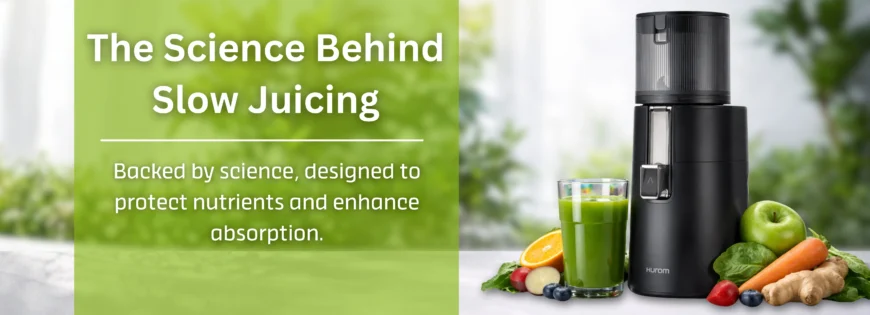
The Science Behind Slow Juicing and Why It’s Better for You
Juicing isn’t just about turning fruits and vegetables into liquid—it’s about how effectively your body can absorb the nutrition inside them. While fast, high-speed juicers may seem convenient, modern nutrition science increasingly supports slow juicing as the superior method. Understanding the science of slow juicing explains why this approach delivers better taste, higher nutrient retention, and long-term health benefits.
Let’s explore what really happens at a cellular level during juicing, the proven benefits of slow juicing, and why slow juicing is better than fast juicing—especially when done with advanced cold press technology like Hurom.
The Science of Slow Juicing: What Makes It Different?
Slow juicing (also known as cold press or masticating juicing) uses a low-RPM auger to gently crush and press produce. This process mimics traditional hand-pressing rather than aggressive mechanical shredding.
Scientifically, this matters because:
- Heat accelerates vitamin degradation, especially vitamin C and antioxidants
- Oxygen exposure triggers oxidation, reducing nutritional value
- Plant enzymes are heat-sensitive and easily destroyed
Slow juicing reduces heat and oxygen exposure, preserving the natural molecular integrity of vitamins, enzymes, and antioxidants. This principle forms the core of the science of slow juicing—keeping nutrients intact so your body can absorb and use them effectively.
| # | Factor | Slow Juicing | Fast Juicing |
|---|---|---|---|
| 1 | Operating speed | Low RPM | High RPM |
| 2 | Heat generation | Minimal | High |
| 3 | Oxidation | Low | High |
| 4 | Enzyme preservation | Excellent | Poor |
| 5 | Juice texture | Smooth, dense | Frothy, airy |
| 6 | Nutrient stability | High | Reduced |
From a nutritional standpoint, slow juicing vs fast juicing is a clear contrast between preservation and degradation.
Benefits of Slow Juicing Backed by Nutrition Science
1. Superior Nutrient Retention
Slow juicing preserves heat-sensitive vitamins, antioxidants, and phytonutrients that support immunity, metabolism, and cellular repair.
2. Better Enzyme Activity
Enzymes aid digestion and nutrient absorption. Because slow juicing avoids heat, these enzymes remain active, making juice easier on the digestive system.
3. Reduced Oxidative Stress
Lower oxidation means juice stays fresh longer and retains its natural color, flavor, and nutritional integrity.
4. Improved Mineral Bioavailability
Slow extraction breaks down fibrous plant cells more efficiently, releasing minerals like iron, magnesium, and potassium in a form your body absorbs better.
These are the real, measurable benefits of slow juicing—not just marketing claims.
Why Slow Juicing Is Better for Digestion & Daily Health
Digestive efficiency is often overlooked in juicing conversations. Juice made through slow extraction:
- Is smoother and less irritating to the gut
- Requires less digestive effort
- Supports stable energy levels when paired with vegetables
This is why nutritionists often recommend slow juicing for:
- Daily wellness routines
- Detox programs
- Diabetic and gut-sensitive individuals
Scientifically and practically, this is why slow juicing is better for consistent, long-term health.
Why Hurom Sets the Gold Standard in Slow Juicing
Hurom pioneered Slow Squeeze Technology®, designed to replicate the traditional hand-pressing method while maximizing efficiency.
Why Hurom stands out scientifically:
- Optimized low-RPM extraction to minimize oxidation
- Designed for consistent pressure and smooth juice flow
- Excellent performance with leafy greens, fruits, and fibrous vegetables
- Juice with higher nutrient stability and superior taste
When you choose Hurom, you’re not just buying a juicer—you’re investing in technology built around the science of slow juicing.
Conclusion
Slow juicing isn’t a trend—it’s a scientifically sound method of preserving the integrity of fruits and vegetables. By minimizing heat and oxidation, slow juicing delivers juice that is nutritionally richer, easier to digest, and better tasting.