
Cold Press Juicer vs Centrifugal Juicer: Which Is Better for Healthy Juice at Home?
In today’s fast-paced professional life, health often becomes a secondary priority. Long work hours, screen fatigue, irregular meals, and stress make it difficult to maintain optimal nutrition. That’s why more health-conscious professionals are turning to fresh homemade juice as a simple yet powerful way to support energy, immunity, and overall well-being.
But when it comes to choosing the right juicer for home, one question dominates the conversation:
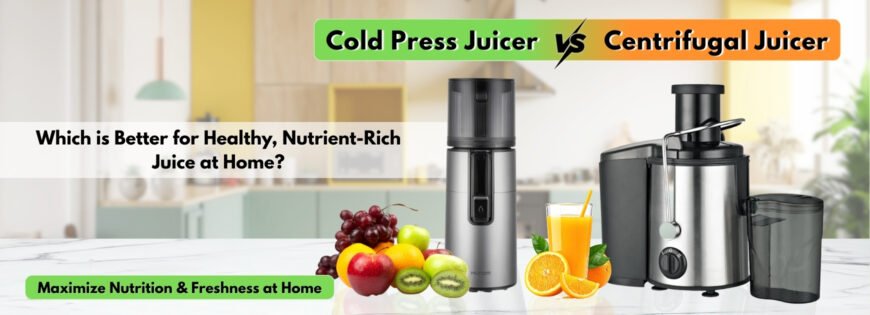
Cold press juicer vs centrifugal juicer — which is better for healthy juice at home?
While both appliances extract juice, the technology, nutritional impact, and long-term value are vastly different. This guide breaks down the differences clearly, helping you make an informed choice that aligns with your health goals, time constraints, and lifestyle.
Why Juicing Matters for Busy Professionals
Fresh juice is one of the easiest ways to consume essential vitamins, minerals, antioxidants, and enzymes—especially when cooking balanced meals daily isn’t always possible.
For professionals juggling meetings, deadlines, and personal commitments, juicing offers:
- Quick nutrient absorption
- Easy digestion
- A convenient alternative to processed snacks
- Support for immunity, gut health, and sustained energy
However, the quality of juice depends entirely on the juicer you use.
Understanding the Two Juicer Types
What Is a Centrifugal Juicer?
A centrifugal juicer uses high-speed spinning blades to shred fruits and vegetables. The juice is then separated from pulp using centrifugal force.
- Operates at very high speeds (6,000–14,000 RPM)
- Commonly found in entry-level or budget juicers
- Fast juice extraction
What Is a Cold Press Juicer?
A cold press juicer (also known as a slow juicer or masticating juicer) uses a slow-rotating auger to gently crush and press produce.
- Operates at low speeds (40–80 RPM)
- Minimal heat and oxidation
- Designed to preserve nutrients
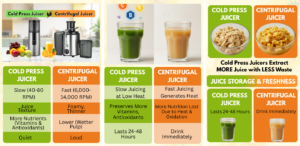
Cold Press Juicer vs Centrifugal Juicer: Quick Comparison Table
| Feature | Cold Press Juicer (Slow Juicer) | Centrifugal Juicer |
| Operating Speed | 40–80 RPM (slow) | 6,000–14,000 RPM (fast) |
| Nutrient Retention | Very high (preserves vitamins, enzymes, antioxidants) | Moderate to low (heat can degrade nutrients) |
| Juice Quality | Smooth, full-bodied, less foam | Thin, more foam, separates quickly |
| Juice Yield | High (drier pulp, less waste) | Lower (more juice left in pulp) |
| Leafy Greens & Fibrous Veggies | Excellent (spinach, kale, methi, carrots) | Poor to moderate (requires extra effort) |
| Oxidation & Shelf Life | Juice lasts 24–48 hours refrigerated | Must consume immediately |
| Noise Level | Quiet operation | Loud, disruptive |
| Ease of Cleaning | Moderate (parts need rinsing, often dishwasher-safe) | Easy, fewer parts |
| Speed of Juice Extraction | Slower (but higher yield per batch) | Very fast |
| Best For | Health-focused daily juice, detox, nutrient retention | Occasional juice, budget-friendly, soft fruits |
If your goal is daily nutrition, detox, and maximum health benefits, a cold press juicer is the smarter choice despite being slightly slower.
Key Advantages of Cold Press Juicers
Better Nutrition & Higher Juice Yield
Cold press juicers extract juice at low speeds, reducing heat and oxidation. This preserves essential vitamins, minerals, enzymes, and antioxidants. You also get more juice per fruit or vegetable with less waste, which is ideal for expensive or seasonal produce.
Excellent for Leafy Greens & Hard Produce
Unlike centrifugal juicers, cold press juicers handle fibrous vegetables, leafy greens, and hard fruits effortlessly. This makes them perfect for green detox juices, immunity blends, and nutrient-rich morning drinks.
Quiet & Less Foam
Low-speed extraction ensures quiet operation with minimal foam. Busy professionals can make juice early in the morning without disturbing family members or roommates.
Fresh Juice That Lasts Longer
Cold-pressed juice can stay fresh in the refrigerator for up to 48 hours, allowing for prep-ahead routines—ideal for professionals with limited mornings.
Cost Consideration: Short-Term vs Long-Term Value
Centrifugal juicers are usually cheaper upfront. However:
- Lower juice yield increases ingredient cost
- Faster wear and tear
- Limited use beyond soft fruits
Cold press juicers may have a higher initial investment, but they offer:
- Better durability
- Lower produce wastage
- Multi-purpose use (juice, nut milk, sorbet)
For professionals who view health as an investment, cold press juicers deliver superior long-term value.
Conclusion
Centrifugal juicers may suit occasional users, but for daily juice, wellness routines, and busy professionals, they fall short in nutrition, versatility, and quality.
Elevate your health and simplify your wellness routine with a premium cold press juicer designed for modern professionals. Enjoy café-quality juice at home, preserve nutrients, and stay energized throughout your busy day.
If you’re ready to upgrade your lifestyle, now is the perfect time to buy a cold press juicer that delivers superior nutrition, smoother texture, and long-term durability.
Discover our range of premium cold press juicers today and transform the way you juice at home.
Your health deserves more than speed—it deserves quality.